OK, so we made the decision to spend the year or two exploring the USA after closing on the sale of our home. So now what?
How do we choose a home on wheels? Seriously, there are so many options. As this topic seems to be the most popular for both experienced and new RVers, we thought we’d share it with you.
After some searching, we quickly realized that while we agreed we didn’t really want to tow anything, we had very different thoughts regarding the ideal living situation. On one end of the options spectrum, was basically a pop up tent that goes on top of the car, on the other end, was the need to have a bathroom. Both options are great for different reasons, but the pop up tent seemed to be a better fit for short getaways at campsites, not full time exploring, and certainly not ideal for any sort of off grid camping for any real length of time. After reviewing requirements at various parks and campgrounds, we decided to go with a truck and camper combination.
We found a 14 year old truck and a 20 year old camper that both met our needs and budget. Our overall set up has a length of 22 feet when we attached the bike rack, which means we can easily navigate tight and winding roads in national parks as well as fit into any campsite. Plus, it is somewhat easy to drive (always remember the height…), has a solar panel to keep the batteries topped off, and we can drop the camper when we want to take the truck by itself to explore.
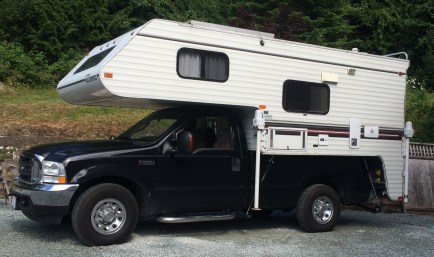
A lot of people ask how we are able to live in something with less square footage than the walk-in closet of our last home. The most common word we hear is “cramped”, sometimes sugar coated into “cozy”, or a personal favorite “you’re so brave”. To be honest, we look at this like a hotel room we bring with us. We are the kind of travelers who spend our time exploring, not lounging in the room. This little palace is perfect for us.
Those who know us well, know we are people who research, plan, and then do more research. To make sure we had enough information to feel safe as we traveled and prepared for whatever could happen while on the road, we attended seminars on topics ranging from solar power, generators, safety on the road, tank maintenance (septic and grey water), and dispersed camping, to name just a few. Between the classes we took, and the online RV groups we joined, we felt ready to head out and start this adventure.
 Traveling Team Fischer